
wellortho@welltrusttech.com
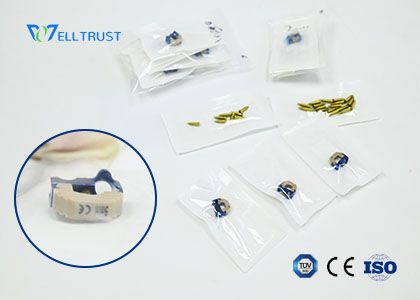
PEEK spinal cages are interbody implants used in selected spinal fusion procedures. When choosing a PEEK cage, surgeons, hospitals and orthopedic distributors should consider the spinal region, surgical approach, cage dimensions, graft window, profile, compatible instruments and product documentation. A cage should be evaluated as part of a complete spinal fixation system rather than as an isolated implant.
PEEK stands for polyetheretherketone, a polymer used in a range of medical implant applications. A PEEK interbody cage is placed in the disc space according to the selected spinal fusion technique. Its role is to provide a defined spacer configuration while the surrounding fixation and graft strategy are managed according to the surgeon’s plan.
Well Trust lists PEEK Cage/Titanium Cage within its Spinal System product range. The company’s product information includes cervical PEEK cages as well as PEEK-related instrument sets for PLIF and TLIF configurations. The exact product indication, dimensions and compatible instruments should be verified in the current technical documentation.
PEEK is used in spinal implant design because its material properties can support the requirements of an interbody spacer. The Well Trust Cervical PEEK Cage page describes the product as a PEEK interbody fusion cage and identifies radiolucent PEEK as part of the product design. Radiolucency can be relevant when postoperative imaging assessment is required, although imaging protocols and clinical interpretation remain the responsibility of qualified healthcare professionals.
The product page also describes an anatomic trapezoidal profile, graft space and surface features intended to support positioning. These design elements should be assessed together with the cage’s height, footprint, angle and the requirements of the selected procedure.
PEEK cage selection depends strongly on the spinal region and surgical approach. A cervical PEEK cage is designed for the cervical spine, while lumbar interbody cages are associated with different approaches and instrument configurations. A cervical cage should not be selected using the same criteria as a lumbar cage without confirming the intended anatomy and surgical technique.
Well Trust’s Spinal System page lists several related categories:
Well Trust provides a spinal product range that includes PEEK and titanium cage categories, pedicle screw systems and spinal instruments. The Spinal System page also lists 5.5 and 6.0 spinal pedicle screw systems, minimally invasive pedicle screw systems, cervical screw systems and spinal system instruments.
For a complete product review, customers can also evaluate the MIS Pedicle Screw, Spinal Pedicle Screw and the available cage instrument sets. The final configuration should be confirmed according to the intended procedure and the applicable product documentation.
A PEEK spinal cage is an interbody implant made from polyetheretherketone and designed to occupy the disc space as part of a spinal fusion procedure. The exact indication and configuration depend on the product documentation and surgical plan.
A PEEK interbody cage is used as a spacer within the intervertebral disc space during selected spinal fusion procedures. It is used with compatible instruments and other fixation components according to the applicable surgical technique.
Selection factors include spinal region, surgical approach, cage height and footprint, lordotic profile, graft window, imaging requirements, compatible instruments and the manufacturer’s instructions.
The Well Trust product page lists a 4–10 mm size range for its Cervical PEEK Cage. Buyers should confirm the exact model, available sizes and current technical documentation before ordering.
The Well Trust Spinal System page lists PLIF PEEK Cage and Titanium Lumbar Cage Instrument Set, TLIF PEEK Cage Instrument Set and Cervical PEEK Cage Instrument Set products. The required set should be confirmed according to the selected cage and surgical approach.
Choosing a PEEK spinal cage requires a complete review of the spinal region, surgical approach, cage dimensions, profile, graft window, imaging requirements and instrument compatibility. Well Trust’s Spinal System includes PEEK and titanium cage categories, cervical PEEK cage products and related PLIF, TLIF and cervical instrument sets. Confirming the exact model and technical documentation before purchase helps hospitals and distributors build a more suitable spinal implant configuration.
Tel: 86-18102187175
Whatsapp:86-18102187175
E-mail: wellortho@welltrusttech.com
Working Hours: Monday-Friday UTC+8: 9:00AM-6:00PM
Add1: 1-1301 Xindu Building, Wandezhuang Street, Wanxing Street, Nankai District, Tianjin, China
Registered address: Room 225, No.2 Huatian Rd., Huayuan Industrial Park, Binhai High-tech Zone, Tianjin, China.
Well Trust(Tianjin) Tech. Co.,Ltd


